





Solar Value Shifts: Europe’s Project, Storage and Safety Signals
Report date: 14 August 2026, Beijing Time
Monitoring window: Priority coverage since the previous edition on 12 August and during the past 24 hours. French module recycling is included as a 72-hour supplement. Event dates and publication dates are shown separately.
One-line takeaway
Rising cell prices and elevated freight are narrowing the room for ultra-low module quotations, while Europe’s more durable opportunities are moving toward Finland’s utility-scale pipeline, storage retrofits, DC safety and lifecycle compliance. The strongest sales proposition is no longer the lowest price per watt; it is deliverable inventory supported by credible system, logistics and asset-value evidence.
Priority hot topics ranked by sales value
1. Finland adds 478 MW of utility-scale solar, but the next cycle depends on industrial demand and PPAs
Finland commissioned eight solar plants above 1 MW in the first half of 2026, adding 478 MW and lifting cumulative utility-scale capacity to 842 MW across 45 operating projects. The 204 MW Kalanti plant is now the country’s largest. Three EU cross-border renewable tender rounds have supported Finnish projects, with the third round open until 1 September.
The headline capacity should not be mistaken for uninterrupted near-term procurement. The industry expects a quieter second half, and the next order cycle will depend on electricity-intensive industrial investments reaching final investment decisions and signing PPAs. Suppliers should map the 2027 pipeline across developers, EPCs, industrial offtakers and financing partners, then qualify products early with snow-load, low-temperature, logistics and bankability documentation.
Event date: H1 2026, through 30 June 2026 · Publication date: 13 August 2026 · Priority / confidence: High / High · Class: lead · Primary source · Tender context
2. Cell-price increases are taking hold while freight supports European module spot pricing
InfoLink’s 12 August weekly assessment puts average Chinese n-type cell prices at CNY 0.29/W for 183N, CNY 0.28/W for 210RN and CNY 0.285/W for 210N. The average export price for 183N cells rose to $0.043/W as suppliers controlled deliveries and reopened negotiations.
Module transactions have not moved in parallel. Delivered Chinese TOPCon modules were reported around CNY 0.65–0.73/W for utility projects and CNY 0.70–0.76/W for distributed projects, while the overseas TOPCon average remained at $0.115/W. Freight from China to Northern Europe was near $5,000 per 40-foot high-cube container. This is not a broad module-price spike. It is evidence that component costs and logistics are reducing suppliers’ ability to maintain aggressive offers. European quotations should use shorter validity periods, separate warehouse stock from goods in transit, and state freight, insurance and Incoterms explicitly.
Event date: 6–12 August 2026 price window · Publication date: 12 August 2026 · Priority / confidence: High / High · Class: question / risk · Source

3. UK fire data moves DC cable and connector quality into the procurement conversation
QBE’s survey of UK fire services reports that PV-linked fires increased from 91 in 2022 to 212 in 2025. Among identified causes in 2025, DC cabling and connectors accounted for 49 cases, ahead of modules at 36, battery storage at 23 and inverters at 19.
The overall incidence remained below 0.07 fires per 1,000 systems across roughly 1.93 million operating installations, so the findings should not be presented as a general solar crisis. The commercial implication is narrower and more useful: connector compatibility, crimp quality, cable selection, installation records, thermal inspections and traceability are becoming insurance and acceptance criteria. A module quotation that ignores the DC side leaves an increasingly visible risk outside the commercial offer.
Event date: Survey period 2022–2025; 2025 fire data · Publication date: 13 August 2026 · Priority / confidence: High / Medium-high · Class: risk / lead · Source
4. AC-coupled storage is turning Germany’s installed-PV retrofit market into a standard channel category
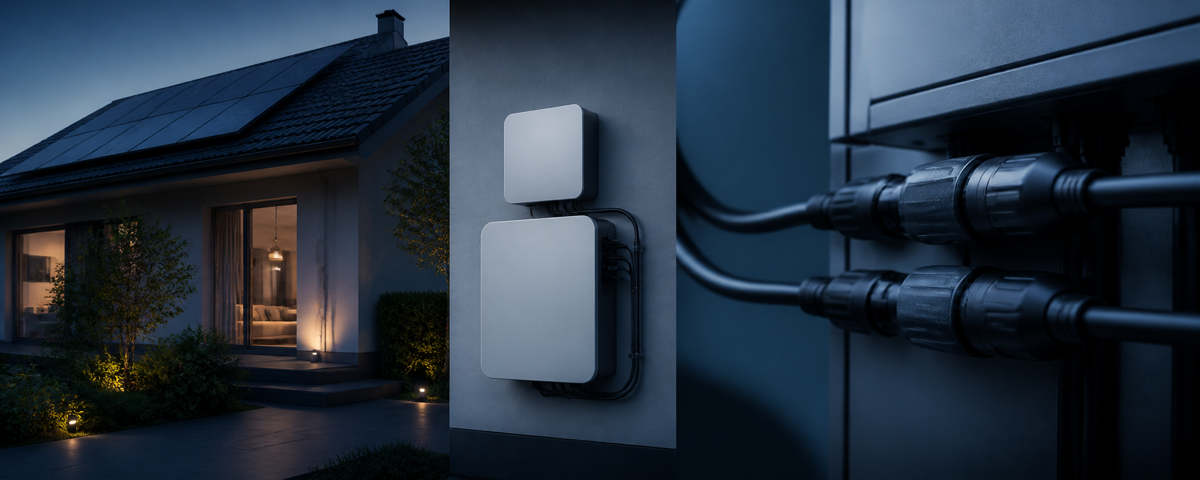
SunEnergyXT has introduced an AC-coupled LFP system in Germany for existing PV installations. Each master unit combines 5 kWh of storage with a 2.4 kW bidirectional inverter and can expand to 30 kWh. A three-master architecture can reach 90 kWh and 7.2 kW per phase. The product also claims emergency output, UPS switching within 10 ms, IP65 protection and a 10-year warranty.
These are manufacturer-reported specifications rather than independent test results. Even so, the architecture is commercially significant. Storage retrofits that do not require replacement of the original PV inverter are becoming easier for distributors and installers to package. The stronger route to market is not one universal battery offer, but separate configurations for homes, clinics and retail sites, and small commercial users, each tied to load profile, backup requirement and grid constraint.
Event date / publication date: 13 August 2026 · Priority / confidence: Medium-high / Medium-high · Class: lead / competitor · Source
5. Egypt’s 1.1 GW solar-plus-storage project reaches full operation, with a larger pipeline behind it
Scatec confirmed that the 564 MW second phase of the Obelisk project reached commercial operation on 12 August. The full project combines 1.1 GW of solar with a 100 MW/200 MWh BESS under a 25-year USD-denominated PPA and is expected to generate more than 3,000 GWh annually. Financing came from institutions including EBRD, AfDB, BII and EIB.
The stronger forward-looking sales signal is Scatec’s near-term Egyptian portfolio of more than 4.3 GW of renewable capacity and 4.1 GWh of storage. The completed plant is not a new module order. Its value as market intelligence lies in the repeatable structure: bankable offtake, development-finance participation, hybrid generation and storage, and long-term EPC and O&M requirements. Suppliers should use this structure to identify future qualification windows rather than approach the completed project as an open tender.
Event date: Phase-two COD on 12 August 2026 · Publication date: 12–13 August 2026 · Priority / confidence: Medium-high / High · Class: lead / praise · Official release · Industry report
6. France collects 13,760 tonnes of modules as end-of-life responsibility enters bid economics
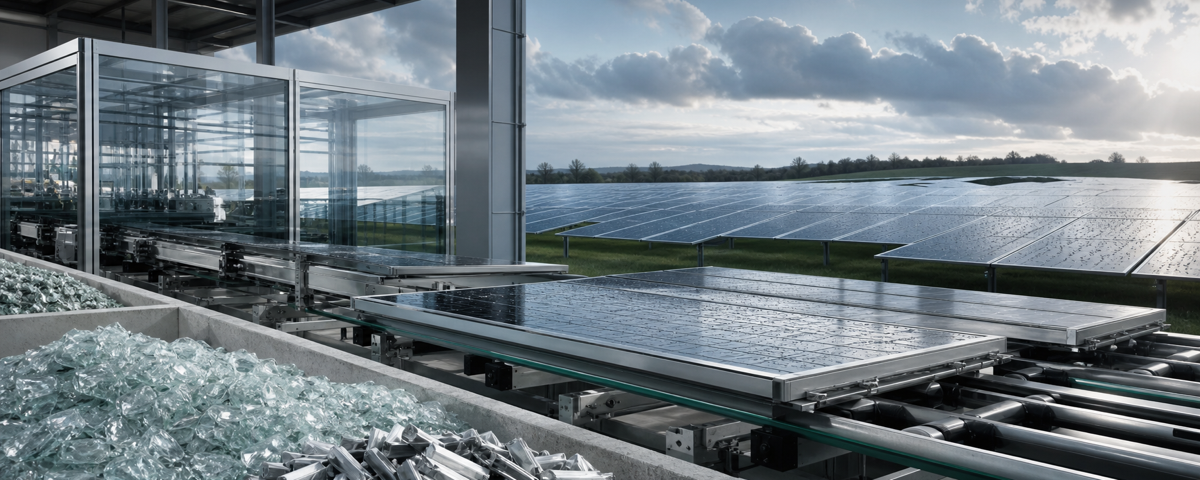
France’s approved PV eco-organisation Soren reported collecting 13,760 tonnes of end-of-life modules in 2025, 40% more than in 2024. It processed 12,736 tonnes with a recovery rate above 90% and expects annual French end-of-life volumes to approach 180,000 tonnes by 2040.
This is more than an ESG message. Producer responsibility, eco-fees, serial-number traceability, dismantling and recycling routes affect tender qualification and lifecycle cost. Importers and distributors should identify the locally responsible producer before quoting, confirm that cross-border inventory is registered correctly and put recycling obligations into the contract rather than leaving them as a post-sale assumption.
Event date: 2025 operating data · Publication date: 12 August 2026, 72-hour supplement · Priority / confidence: Medium-high / High · Class: lead / risk · Industry report · Soren
7. Module differentiation is moving beyond peak wattage to resilience and shade yield
Two signals point to a broader definition of module value. Trina Solar introduced a typhoon-resilience package whose highest configuration is claimed to exceed 8,000 Pa static mechanical load, combining reinforced construction, self-locking clamps and tracker stow strategies. Separately, TU Delft simulations found that modules with integrated buck converters could deliver 15%–20% more annual energy than string-inverter systems under partial shading and 2%–3% more than microinverter or optimiser systems. The study compared IBC and front/back-contact TOPCon designs.
The evidence types are different: the first is primarily a manufacturer claim, while the second is a simulation rather than a large field deployment. The useful sales lesson is not to repeat the headline numbers without qualification. For 730–750 W products, mechanical load, hail resistance, clamp compatibility, shade behaviour and BOS impact should sit beside the wattage label and be linked to the actual project environment.
Event date / publication date: 13 August 2026 · Priority / confidence: Medium / Medium-high · Class: competitor / question · Resilience source · Research paper · Industry summary
European sales opportunities
| Market and target account | Product entry point | Recommended follow-up |
|---|---|---|
| Finland Developers, EPCs and industrial PPA advisers | 730–750 W modules, cold-climate and snow-load evidence, project logistics and bankability files | Build a 20-account list within 48 hours. Record project stage, permitting, PPA position, tender timing and approved-module requirements. |
| Germany and the Netherlands Installed-PV retrofit installers | AC-coupled LFP, EMS, smart meters, backup circuits and installed-inverter compatibility | Create 5, 10, 20 and 30 kWh packages. Collect inverter, load curve, grid limit and backup requirements first. |
| United Kingdom EPCs, distributors and insurance-linked service providers | Traceable cables, matched connectors, crimp tools, installation QA and thermal inspection | Attach a one-page DC safety schedule to every quotation. Prohibit mixed-make connectors and retain crimp and torque records. |
| France Importers and fleet owners | Producer responsibility, eco-fees, serial-number records, dismantling and recycling | Confirm the locally responsible producer and define eco-fees, evidence and decommissioning in the contract annex. |
Risks and warnings
- Pricing: Cell prices have moved, but module transactions remain comparatively stable. Do not convert polysilicon expectations directly into a European module increase. State quotation validity and stock status.
- Logistics: Freight remains exposed to capacity management, Red Sea rerouting and carrier increases. Goods-in-transit quotations face greater margin risk than warehouse stock.
- Quality and insurance: UK fire incidence remains low and should not be sensationalised. Cable, connector and installation records are nevertheless likely to face more scrutiny.
- Policy and project timing: Finnish additions may slow in the second half, while planning changes could tighten zoning for sites above 50 hectares. Pipeline is not procurement.
- Technology claims: Figures such as 8,000 Pa, 10,000 cycles and 20% shade gains come from company disclosures or modelling. Their evidence type must be stated.
Brand and competitor dynamics
No sufficiently reliable new public Solligent update was found during the past 24–72 hours. The classifications below cover verified open-source signals only and do not represent platform-wide closed-network mention volume.
| Class | Verified signal | Routing and SLA |
|---|---|---|
| lead | Finnish utility pipeline and 1 September deadline; German retrofits; French recycling compliance; Egyptian growth pipeline | Sales owner: create target accounts and assign an owner within one business day. |
| risk | UK DC cable and connector causes; elevated freight; uncertain module-price pass-through | Product and procurement owners: verify before quotation and shipment. |
| praise | Obelisk reached full operation under a bankable USD PPA and development-finance structure | Content owner: prepare a financing-structure case card within two days. |
| question | Typhoon-resilience, smart-module and AC-storage claims require independent and local certification checks | Technical owner: validate before customer-facing use. |
| crisis / bug / spam | No verified actionable mention requiring escalation | No escalation. |
Competitor insight: Trina Solar is extending the module proposition from peak wattage to extreme-weather system design, while SunEnergyXT is entering Europe’s installed base with a retrofit architecture that avoids replacing the existing inverter. Both moves show why “more watts” alone is becoming an incomplete value proposition.
Seven-day trend
Baseline building: five comparable observations. Reports are available for 8, 9, 10, 12 and 14 August. This is insufficient for a continuous seven-day median, so no “2× spike” is calculated.
- European opportunity broadens from C&I into utility scale. Finland’s 478 MW brings Nordic utility-scale activity into the high-priority set.
- Safety and recycling gain continuity. The UK fire survey and French collection data push system quality and lifecycle responsibility higher in the commercial conversation.
- Pricing moves from expectation to partial execution. Cell prices have moved, while module pass-through remains incomplete.
Coverage disclosure
- Measured: EU, company, association, research, price-benchmark and trade-media pages were accessed and reviewed directly. “Measured” means an open page was checked; it does not mean full-web coverage or measured sales.
- Proxy: No user export was available for X, Instagram, TikTok, LinkedIn, Xiaohongshu, WeChat Official Accounts, WeChat Channels or Douyin. Indexed references were used for discovery only and were not converted into volume or sentiment metrics.
- User-provided: Monitoring priorities, brand rules, report history and Solligent publishing authorisation. No user-exported social dataset was used.
- Priority labels: High, medium and low are editorial rankings based on sales value, policy impact, project scale, timeliness and source quality, not measured social mentions.
Three immediate sales actions
- Update European module quotation rules today. Quote warehouse stock, goods in transit and new production separately. Use a validity period of seven days or less and state freight, insurance, Incoterms and cell-cost triggers.
- Run separate Finland and Germany campaigns. Target 20 Finnish project accounts with 730–750 W and cold-climate documentation, and 20 German installers with 5–30 kWh AC-coupled retrofit packages.
- Add a safety and circular-compliance annex to every European quotation. Cover connector compatibility, cable and crimp records, thermal inspection, serial-number registers, producer responsibility, eco-fees and recycling.
This report is for market intelligence and sales-lead screening only. It is not investment, legal or procurement advice.