





Solar’s Next Value Layer: Grid Access, Heat Resilience and Smarter Storage
Report date: 17 August 2026, Beijing Time | Monitoring cutoff: 04:05 Beijing Time
Priority was given to developments since the 14 August edition. No sufficiently material, independently verifiable solar-industry announcement was confirmed during the latest 24 hours, a weekend period. This edition therefore uses the permitted 48–72-hour monitoring window.
One-line takeaway
Solar’s next commercial value layer is forming around constrained grid access, heat-resilient operation, time-aware storage dispatch and engineering-led procurement. The winning offer is increasingly a controllable energy system, not simply the lowest module price per watt.
Priority hot topics ranked by sales value
1. Europe’s data-center grid queue creates a bankable opening for solar, storage and load orchestration
Across the established Frankfurt, London, Amsterdam, Paris and Dublin data-center cluster, new grid connections can take seven to ten years, according to an industry analysis published by pv magazine. Available capacity in these hubs has fallen to around 6%, while more than 80% of capacity is pre-let before completion. The reported EMEA development pipeline is growing by more than 40% year on year.
The opportunity is not a generic “solar for data centers” pitch. Solar and batteries cannot replace a constrained connection by themselves, but they can reduce peak import, shape ramp rates, support staged energisation, improve the economics of an existing connection and strengthen a hybrid PPA strategy. Suppliers should enter at pre-FEED stage, when load profiles, redundancy requirements, connection offers and land constraints can still influence the architecture.
- Event date: European market conditions assessed in August 2026
- Publication date: 15 August 2026, date-only source
- Source: pv magazine — Making the data center business case
- Priority / confidence: Very high sales priority / Medium-high confidence
- Triage: lead
2. Ukraine’s time-window rule turns hybrid-system control into part of the product
Ukraine clarified the hours during which household PV output qualifies for the green tariff. Systems up to 30 kW qualify from 04:00 to 23:00 between 1 April and 31 October and from 06:00 to 21:00 between 1 November and 31 March. Electricity exported outside those windows is settled at the applicable hourly day-ahead price. The rule also appears designed to prevent battery energy discharged outside the eligible windows from receiving the green tariff.
For distributors and installers, the implication is structural: a hybrid system must demonstrate compliant metering, dispatch logic, tariff configuration and auditable energy flows. Battery capacity alone is not the differentiator. The commercial bundle should include an EMS configuration record, clear export-control behaviour, remote diagnostics, spare-part availability and local-language documentation. Credit, logistics, warranty service and regulatory change should be priced explicitly.
- Event date: Rule clarification reported on 14 August 2026; the underlying tariff resolution took effect on 1 July 2026
- Publication date: 14 August 2026; official resolution published 30 June 2026
- Sources: pv magazine — Ukraine specifies eligible rooftop PV hours; Ukraine energy regulator — Resolution No. 1029
- Priority / confidence: High sales and policy priority / High confidence
- Triage: lead / question
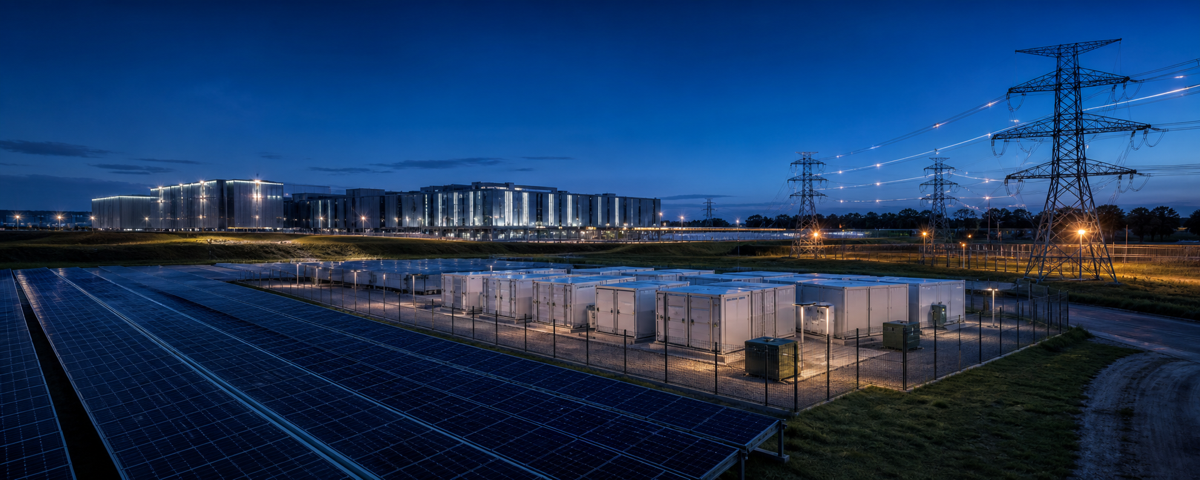 Grid access is becoming a design input: solar, storage and load control create value when engineered around the connection.
3. Extreme heat makes temperature-corrected performance and battery operating logic procurement issues
An expert analysis from Meteocontrol notes that a crystalline-silicon module operating at a 65 C cell temperature would produce roughly 16% less power than at the 25 C standard condition if its temperature coefficient is -0.4% per degree. The analysis also highlights the interaction between high ambient temperature, high battery state of charge, cooling demand, accelerated aging and derating.
Nameplate efficiency and peak power are insufficient for hot-market bids. Buyers need temperature coefficients, mounting and ventilation assumptions, inverter derating curves, battery HVAC parasitic load, control behaviour at thermal limits, sensor coverage and incident-access provisions. For 730–750 W modules, connector, cable, junction-box and thermal-inspection discipline form part of the product proposition.
- Event date: European summer operating conditions discussed on 14 August 2026
- Publication date: 14 August 2026, date-only source
- Source: pv magazine — What extreme temperatures mean for PV and storage
- Priority / confidence: High product and O&M priority / Medium-high confidence
- Triage: lead / risk
4. LONGi’s tandem pilot and Trina’s THBC plan show a technology race beyond standard TOPCon
LONGi plans to invest CNY 203.53 million in a 100 MW crystalline-silicon/perovskite tandem pilot line. The same industry brief reports that Trina Solar expects THBC products for high-value rooftop markets to enter mass production in the second half of 2026 and targets small-scale perovskite-tandem production in 2028–2029, with gigawatt-scale capacity in 2029. LONGi separately reported a certified 35.5% tandem-cell efficiency in July 2026.
A 100 MW pilot is a technology-transfer step, not a utility-scale supply base. TOPCon remains the volume platform; BC can command value in area-constrained and appearance-sensitive applications; tandem technology deserves active qualification but should not be presented as a near-term commodity. Product roadmaps should separate manufacturing maturity, certification status, warranty evidence and availability from laboratory efficiency.
- Event date: Pilot investment and manufacturing-roadmap disclosures reported on 14 August 2026
- Publication date: 14 August 2026, date-only source
- Sources: pv magazine — LONGi tandem pilot and Trina roadmap; LONGi — 35.5% certified tandem-cell efficiency
- Priority / confidence: Medium-high competitive priority / High confidence on disclosed plans; medium confidence on future scale
- Triage: question / lead
5. Utility-scale BESS layout is moving earlier in the procurement cycle
PVFarm launched RE STACK for early-stage utility-scale battery layout exploration. The vendor says the software can compare equipment blocks, clearances, road concepts and medium-voltage collection topologies across different sites and manufacturers before detailed engineering. A reported test found that changing the road-grid orientation on an irregular site materially changed the equipment that could fit.
The broader insight is that battery procurement is moving from a container count to a site-fit exercise. Access roads, fire separation, auxiliary equipment, cable routes, drainage, transformer placement and service corridors can change usable energy capacity and project economics. Suppliers that provide accurate geometry, thermal clearances, foundation loads, auxiliary demand and electrical interface files are easier to design in.
- Event date: Commercial launch reported on 14 August 2026
- Publication date: 14 August 2026, date-only source
- Sources: pv magazine — PVFarm launches RE STACK; PVFarm — utility-scale design context
- Priority / confidence: Medium-high project-development priority / Medium confidence because performance claims are vendor-reported
- Triage: lead / question
6. Desert cleaning-robot evidence turns module-surface care into a quantified O&M decision
A Dubai Electricity and Water Authority field study evaluated five dry-cleaning robots on 164 crystalline-silicon modules. Daily robotic cleaning reduced soiling rates from roughly 0.14–0.33% per day to below 0.02% per day, while measured cleaning efficiency ranged from 69% to 99%. The study found no robot-induced cell cracks or electrical defects, but it did identify minor anti-reflective-coating wear and practical issues involving battery overheating, ingress protection, corrosion, alignment and ultraviolet degradation.
Robotic-cleaning compatibility should be documented before a desert project is quoted. Frame geometry, glass and coating specifications, clamp zones, tracker alignment tolerance and accepted brush or cloth pressure belong in the technical file. A low module price can be erased by abrasion, robot stoppages or persistent soiling.
- Event date: Outdoor monitoring from 22 July 2024 to 26 August 2025; findings reported in 2026
- Publication date: 14 August 2026, date-only trade source
- Sources: pv magazine — DEWA cleaning-robot study; Solar Energy — Performance and safety evaluation of PV cleaning robots
- Priority / confidence: Medium-high O&M priority / High confidence
- Triage: lead / question
 The technology race is won twice: first in the pilot line, then through reliable operation, maintainability and surface protection in the field.
7. The August eclipse shows why irradiance alone cannot predict commercial exposure
Solcast’s post-event analysis of the 12 August eclipse found that obscuration, cloud cover and time of day produced very different daily-energy outcomes. Some North American locations with less than 20% peak obscuration recorded daily irradiance losses comparable with European locations above 80% obscuration. Reykjavik’s clear-sky daily resource loss could have exceeded 5%, but cloud cover reduced the additional eclipse-related loss to below 1%.
Power-market effects were even less direct. Spanish day-ahead prices during the eclipse period were reported around EUR 175–250/MWh, roughly 10% above a typical summer weekday range for that time, while New York’s Hudson Valley zone remained within its typical range. Bankable forecasting needs coincident weather, demand, reserve margin, interconnection and dispatch data; a single irradiance headline does not describe revenue or balancing risk.
- Event date: 12 August 2026
- Publication date: 14 August 2026, date-only source
- Source: pv magazine / Solcast — Post-eclipse irradiance and market analysis
- Priority / confidence: Medium forecasting and grid-services priority / Medium-high confidence
- Triage: question / praise
European sales opportunities
Target accounts and marketsProduct entry pointRecommended follow-upData-center developers, colocation operators and EPCs in FLAP-D and secondary European hubsSolar, BESS, EMS, grid-connection studies, hybrid PPAs and staged-energisation modelsAsk for the connection offer, 15-minute load profile, redundancy class, target energisation date and available land. Build an account list around pre-FEED or grid-study projects.Ukrainian residential and C&I distributors, installers and resilience programmesHybrid inverters, LFP batteries, export control, tariff-aware EMS, remote diagnostics and service sparesVerify the current settlement rule locally. Offer a commissioning record that shows eligible export windows and battery-discharge logic. Quote service, logistics and credit risk separately.Southern and Central European EPCs, O&M providers and insurersLow temperature-coefficient modules, 730–750 W utility modules, thermal monitoring, connector traceability and BESS cooling evidenceAdd a hot-weather annex covering derating, battery HVAC load, thermal limits, thermography and emergency access.European utility-scale storage developers and engineering consultantsGeometry files, thermal clearances, auxiliary-load data, MV interfaces and pre-FEED layout supportPackage all design inputs in a controlled data room and offer a rapid site-fit workshop before the container and transformer configuration is locked.
Risks and warnings
- Policy: Ukraine’s tariff windows make dispatch and metering configuration commercially material. Do not assume battery exports receive the same payment as contemporaneous PV generation.
- Thermal performance: High irradiance does not eliminate heat-related derating. Assess module, inverter and battery performance under site temperature, state-of-charge and cooling conditions.
- Technology maturity: Laboratory efficiency, a 100 MW pilot and a mass-production roadmap are different evidence levels.
- Grid and project timing: A seven-to-ten-year connection queue creates demand but also extends the sales cycle. Treat projects without a connection offer as development signals, not purchase orders.
- Vendor claims: RE STACK productivity and capacity-fit benefits are vendor-reported. Validate outputs against engineering and fire-code requirements.
- Pricing: No new, high-confidence module-price benchmark was published during the weekend window. Do not infer a price move from silence.
Brand and competitor dynamics
No sufficiently reliable new public Solligent announcement or third-party mention was found in the monitored period. These classifications cover verified open-source signals and do not represent full-platform social volumes.
ClassVerified signalRouting and SLAleadData-center grid queues; tariff-aware hybrid demand; hot-weather system design; BESS pre-FEED engineering; desert O&M compatibilityQualify named accounts and assign an owner within one business day.questionTandem-pilot scale, THBC timing, software claims and tariff-specific battery dispatch require validationTechnical or policy owner to validate before use in a quotation.praiseOperational forecasting and field O&M evidence provide actionable customer educationConvert into one-page education cards within two business days.crisisNo verified crisis-class signalNo escalation.bugNo verified product-bug signal involving SolligentNo escalation.spamIrrelevant same-name and unrelated company results were excludedLog and discard.
Competitive interpretation: LONGi is advancing tandem industrialisation while Trina is positioning THBC for premium rooftop applications. Both moves increase the importance of product segmentation. Standard TOPCon offers should compete on verified delivery, system fit and lifecycle documentation rather than imitate laboratory-efficiency headlines.
Seven-day trend
Baseline building: Six comparable report observations are now available, but the series is not a continuous seven-day daily baseline. No two-times-median spike is calculated.
- Opportunity is shifting from generation assets to constrained loads. Data-center grid scarcity and tariff-aware hybrid dispatch are emerging as demand-side buying triggers.
- Heat resilience has become a recurring system theme. The evidence now extends to temperature-corrected yield, BESS aging, cooling load and control logic.
- Technology competition is widening. TOPCon remains the volume reference, while BC roadmaps and tandem pilots add a decision layer around application fit and production maturity.
- No verified weekend price anomaly. The absence of a new benchmark is not treated as a price signal.
Coverage disclosure
- Measured: Public regulator, company, research, industry-media and analytical pages were accessed directly. This does not mean the entire internet or market was measured.
- Proxy: X, Instagram, TikTok, LinkedIn, Xiaohongshu, WeChat Official Accounts, WeChat Channels and Douyin had no user-exported analytics. Indexed references were used only for discovery, not mention or sentiment counts.
- User-provided: Monitoring themes, brand rules, report history and Solligent publishing authorisation were supplied by the user. No user-exported social dataset was available.
- Priority labels: Priority and confidence are editorial assessments based on sales relevance, source quality, evidence type and recency. They are not popularity scores.
Three immediate sales actions
- Launch a grid-constrained-load account sprint. Build a 25-account list covering European data centers, industrial sites and C&I campuses with delayed or limited connections. Qualify connection status, load profile, energisation date and openness to solar-plus-storage.
- Add two technical annexes to relevant quotations. Cover hot-weather derating, battery HVAC load, thermal alarms and emergency access, plus EMS dispatch, export control and settlement logic for tariff-sensitive markets.
- Package design-in data for faster pre-FEED approval. Provide module dimensions, clamp zones, electrical parameters, mechanical loads, storage geometry, clearances, auxiliary demand, MV interfaces, O&M access and lifecycle documentation in one controlled file.
This report is for market intelligence and B2B lead screening. It is not investment, legal, engineering or procurement advice.