





Europe's Solar Market Is Buying Flexibility: Storage, Grid Access and Cost Floors
Edition: 24 August 2026 | Monitoring window: 21–24 August 2026 | All dates: Beijing Time (UTC+8)
One-line takeaway: Europe's next solar margin is moving from module-only supply toward dispatchable systems: fiscal flexibility, storage-led subsidies and paid grid access now reward suppliers that can package hardware with controls, documentation and delivery discipline.
Priority hot topics ranked by sales value
1. EU fiscal flexibility can turn energy security into a new PV-and-storage funding channel
The European Commission's guidance on broadening the National Escape Clause allows Member States to request budget flexibility for qualifying energy-security measures in 2026–2028. The illustrative eligible list includes renewable-energy projects, batteries and energy storage, heat pumps, EV charging and building renovation. Energy-security measures remain subject to a ceiling of 0.3% of GDP per year and 0.6% cumulatively, inside the overall 1.5% ceiling.
The commercial implication is not an automatic order boom. It is a new route through which national governments can finance integrated energy-resilience programmes. Suppliers should map ministries, municipalities, public-building portfolios and C&I retrofit programmes before budgets become tenders. A module-only pitch will be weaker than a documented package linking PV, storage, EMS, backup capability and measurable fossil-fuel displacement.
- Event date: 18 August 2026
- Publication date: 21 August 2026
- Priority / confidence: Very high / High
- Sources: Official Journal of the European Union · European Commission · pv magazine
2. Austria is redirecting solar support toward storage, EMS and grid-useful applications
Austria plans to redesign its 2027 support logic after the latest grant budget was exhausted in seconds. The announced direction reduces broad support for standard small PV systems and gives more weight to battery retrofits, intelligent energy management, building-integrated PV, agri-PV, solar carports, floating PV and other specialised applications. A ministry-commissioned study indicates that up to 8 GW of market-oriented storage capacity by 2030 could be economically beneficial.
This is a channel-reset signal. Residential installers that relied on simple PV subsidy conversion will need retrofit-ready storage offers, while commercial integrators will need peak-shaving, dynamic-tariff and EMS evidence. The retained Made-in-Europe bonus also means origin documentation and component traceability can influence the effective offer, not merely the equipment price.
- Event date: 20 August 2026
- Publication date: 21 August 2026
- Priority / confidence: Very high / Medium-high
- Sources: pv magazine · Austrian Ministry · Photovoltaic Austria

Policy budgets and connection capacity are becoming as decisive as equipment pricing.
3. Romania's first grid-capacity auction converts connection scarcity into a priced project gate
Romania's first capacity-allocation process received 12 applications covering 491 MW across seven grid zones. The initial study found no immediately available capacity through 2037 without reinforcements; applicants are therefore bidding for capacity that must be created by future network works. The next pricing study is expected in September, and bidding is scheduled to begin on 30 October. Applicants lodged a €20,000/MW participation guarantee, creating a meaningful filter against speculative queue positions.
For equipment suppliers, a grid application is not yet a bankable purchase order. The stronger sales opportunity sits with developers that can show a guarantee, a defined connection year, reinforcement exposure and an EPC schedule. They will value staged deliveries, offer-validity rules, bankable warranties, grid-code documentation and substitution control. For utility-scale projects, 730–750 W modules can reduce balance-of-system quantities, but the pitch should quantify layout, voltage window, handling and delivery risk rather than lead with wattage alone.
- Event date: 14 July 2026, application window closed; updated auction status confirmed 21 August 2026
- Publication date: 21 August 2026
- Priority / confidence: High / High
- Sources: Transelectrica · pv magazine
4. TOPCon cell costs jumped, but export module pricing has not yet followed in full
OPIS reported week-on-week increases of 13.09% for FOB China TOPCon M10 cells to $0.0458/W and 12.03% for 210R cells to $0.0447/W in its 18 August assessment. M10 and 210R wafer prices also rose by 9.09% and 11.19%, respectively. The upstream move reflects firmer polysilicon sentiment, cost discipline and stronger export buying, particularly from India.
The important distinction is transmission timing. Persistent module overcapacity and weak end demand still limit export-module pricing power, so a higher cell quote does not automatically justify the same percentage increase in a finished module. European buyers should expect shorter quote validity and more negotiation over replacement lots, while distributors should avoid turning an upstream spike into a broad panic-buy recommendation. The defensible response is a two-stage offer: available European stock priced separately from forward shipments with explicit validity, allocation and freight assumptions.
- Event date: 18 August 2026
- Publication date: 21 August 2026
- Priority / confidence: High / High
- Sources: OPIS via pv magazine · Shanghai Metals Market

Upstream cell inflation and downstream module pricing are moving at different speeds.
5. EcoFlow's 5 kWh UK launch shows how residential storage is becoming a modular retail category
EcoFlow has opened UK sales for the Stream 5000 family. The Stream 5000 combines 5.024 kWh of storage with up to 5 kW of PV input and 3 kW off-grid output; the AC version targets retrofit use. Published specifications include 10,000 cycles, a 10-year warranty, IP65 protection, low-temperature charging activation and multi-unit expansion up to 90 kWh under the wider system architecture.
The strategic signal is segmentation. A 5 kWh platform can serve first-time solar buyers, existing PV retrofit customers and higher-demand homes through different configurations, but it should not be marketed as a portable 1–3 kWh power station or as a substitute for a C&I backup system. Distributors need separate qualification scripts for daily energy, peak power, grid-export limits, professional installation, backup circuits, communications and expansion plans.
- Event date: 21 August 2026
- Publication date: 21 August 2026
- Priority / confidence: Medium-high / High
- Sources: EcoFlow UK · pv magazine
6. Kostal's 25 kW battery inverter targets the gap between residential storage and full C&I systems
Kostal's Plenticore BI 25 is a three-phase AC-coupled battery inverter aimed at commercial and high-end residential projects. It supports three independent high-voltage battery connections, storage capacities from 5 kWh to 230 kWh, three-phase backup power up to 25 kVA and integration through EEBus and Modbus/SunSpec TCP. The architecture also supports retrofits and independent sizing of PV and battery systems.
This is a useful benchmark for European C&I offers. Buyers increasingly expect peak shaving, dynamic-price operation, backup, building-management integration and staged battery expansion from the same platform. Competitors that quote only inverter efficiency will lose ground unless they can explain controller compatibility, response logic, commissioning responsibility and service escalation.
- Event date: 21 August 2026
- Publication date: 21 August 2026
- Priority / confidence: Medium-high / High
- Sources: Kostal · pv magazine
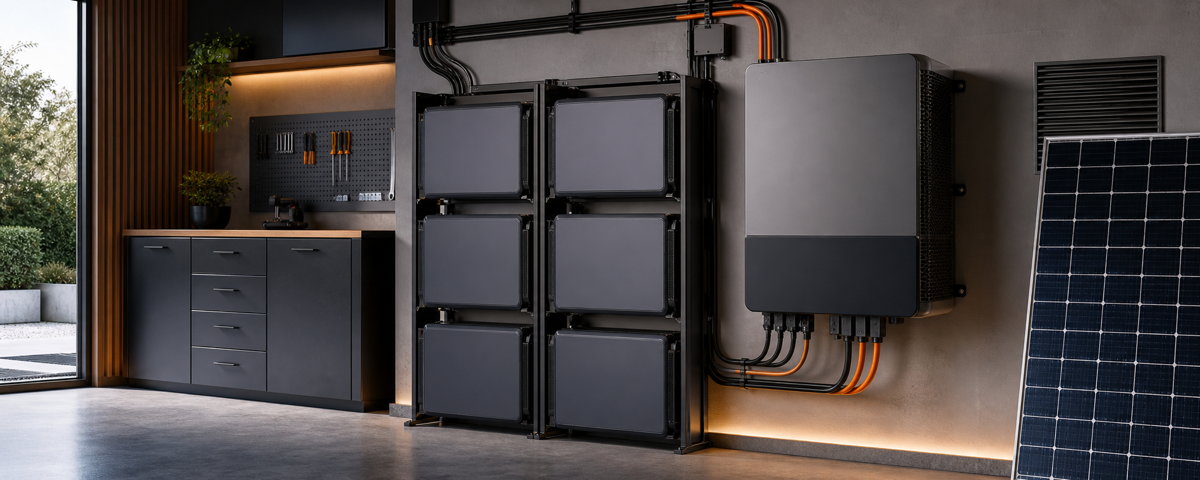
Storage value now depends on controls, safety, serviceability and expansion—not capacity alone.
7. Websol's TOPCon conversion is an expansion signal and a reminder that silver remains a cost lever
Websol is converting a 600 MW mono-PERC cell line into a 750 MW TOPCon line, targeting completion by March 2027. The upgrade would lift total cell capacity to about 1.35 GW, with TOPCon representing roughly 55%. The company reported a 20% reduction in silver use in the 2025–26 financial year and is targeting a further 10%, while evaluating alternative metallisation and planning a phased 4 GW integrated cell-and-module facility.
This is both a supplier-development lead and a competitive signal. New TOPCon capacity will deepen availability, but silver intensity and process conversion risk remain relevant to qualification. Buyers should ask for ramp-yield evidence, batch traceability and change-control procedures before treating expanded nameplate capacity as equivalent to stable commercial output.
- Event date: Update disclosed 21 August 2026; line completion targeted for March 2027
- Publication date: 21 August 2026
- Priority / confidence: Medium / High
- Sources: NSE-filed presentation · pv magazine
European sales opportunities
| Market / target accounts | Product entry point | Why now | Recommended follow-up |
|---|---|---|---|
| Austria: residential and C&I installers, energy advisers, municipal retrofit contractors | Retrofit batteries, EMS, hybrid and AC-coupled storage; specialised PV | 2027 support is moving toward grid-useful storage and controls | Build a partner shortlist; request load profiles; prepare origin documentation and three storage scenarios |
| Romania: developers above 1 MW, EPCs, grid consultants and financiers | 730–750 W modules, project inverters, staged logistics and warranty control | The first capacity auction creates a documented connection gate | Qualify guarantee, grid zone, target year and reinforcement exposure before quoting |
| EU public and commercial building programmes | PV-plus-BESS, heat-pump-ready EMS, backup circuits and monitoring | Fiscal guidance may unlock 2026–2028 energy-security measures | Track national requests and tenders; sell a resilience package, not isolated components |
| UK and DACH residential channels | 5 kWh-class modular storage for new-build and retrofit segments | New launches are educating buyers around modular capacity and dynamic control | Give installers a comparison tool for capacity, power, backup, grid limits and expansion |
| European C&I retrofit market | 25 kW-class AC-coupled inverters and scalable high-voltage storage | Peak shaving, dynamic tariffs and backup are converging | Lead with load profile, outage-critical circuits, tariffs and EMS integration |
Risks and warnings
- Policy: EU fiscal guidance creates eligibility, not committed national budgets.
- Pricing: Cell and wafer prices have risen faster than export module transactions.
- Grid: A Romanian auction entry is a lead signal, not proof of final investment decision or delivery timing.
- Competition: Compare tested storage functions and installation obligations, not marketing claims alone.
- Supply chain: TOPCon conversion requires ramp-yield, traceability and change-control evidence.
- Safety: Capacity, power, backup operation, thermal design and grid compliance are separate specifications.
Brand and competitor dynamics
| Class | Public signal | Commercial meaning | Routing / SLA |
|---|---|---|---|
| lead | Austria storage policy | Partner and retrofit mapping | European business development / 1 business day |
| lead | Romania 491 MW grid process | Identify qualified developers | Utility sales / 1 business day |
| lead | EcoFlow UK launch | Residential benchmark | Storage category / 1 business day |
| lead | Kostal 25 kW inverter | C&I integration benchmark | Solutions engineering / 1 business day |
| lead | Websol TOPCon conversion | Supplier and capacity signal | Sourcing and product / 1 business day |
No new public-source item in the monitored window qualified as a crisis, bug, praise, question or spam mention for Solligent. No crisis flag is raised.
Seven-day trend
Baseline building. The available history contains two prior report observations inside the 17–23 August window, not seven complete daily samples, so a defensible daily median and 2× spike test cannot yet be calculated.
Directional comparison shows one change: prior reports were dominated by flexibility economics and soft module pricing, while this edition contains three concrete European execution gates—fiscal eligibility, storage-led subsidy design and paid grid-capacity allocation. Upstream TOPCon costs are also rebounding without a matching export-module move. This is an anomaly watch, not a measured mention-volume spike.
Coverage disclosure
| Class | Surfaces used | Permitted claim |
|---|---|---|
| Measured | Official EU, ministry, grid-operator, company, exchange-filing and directly reviewed industry pages | Verified public facts; seven deduplicated priority items |
| Proxy | Open-web discovery and search indexing | Discovery only; not closed-platform attention, sentiment or reach |
| User-provided | Report brief, brand rules and historical reports | Scope and directional comparison only |
X, Instagram, TikTok, LinkedIn, Xiaohongshu, WeChat Official Accounts, WeChat Channels and Douyin were not measured because no user-exported native data was provided. No proxy-derived number is presented as a measured closed-platform metric.
Three immediate sales actions
- Open an Austria storage-retrofit sprint: identify 20 installer or energy-adviser accounts, ask for representative load profiles, and send a three-tier storage-plus-EMS offer with origin documentation.
- Create a Romania grid-gate questionnaire: require grid zone, requested year, participation guarantee, reinforcement exposure, EPC status and financing stage before committing allocation or delivery dates.
- Reprice TOPCon with evidence, not fear: split available European stock from forward shipments, cap offer validity, state freight and cell-cost assumptions, and give buyers an approved replacement-lot process.