





Europe's Solar Market Moves From Megawatts to Matched Power
Commercial theme: Europe’s solar market is moving from selling megawatts to delivering matched power, flexibility and delivery certainty.
Reporting cut-off: 04:00 China Standard Time, 28 August 2026. The report prioritizes information published since the previous report on 26 August and marks older underlying events separately.
One-line takeaway
Spain’s proposed hourly renewable-matching rule for data centers, a cluster of solar-plus-storage activity across Southeast Europe, and more than 100 MW of modules returning to the European channel all point to the same sales reality: bankable buyers increasingly need an integrated offer covering generation, storage, controls, documentation and delivery timing.
Priority hot topics ranked by sales value
1. Spain may turn data-center grid access into a market for hourly matched solar and storage
Spain has opened an urgent public consultation on a draft decree that would require data centers above 1 MW to cover at least 80% of electricity consumption with additional renewable generation on an hourly basis. Each new megawatt of data-center demand would need to be matched by one megawatt of renewable capacity commissioned within the previous 18 months, through self-consumption or a long-term PPA. Compliance would be tied to grid-access rights, with escalating network charges and ultimately the possible loss of those rights. Projects already in development would generally have six months to adapt, or three months if awaiting a connection-capacity tender.
The commercial implication is stronger than a simple increase in PPA demand. Annual renewable certificates will not solve an hourly requirement: developers will need generation profiles, storage duration, dispatch logic, metering and auditable energy data that work together. Solar suppliers that can package bankable modules with BESS interfaces, energy-management requirements and clear delivery schedules will be better positioned than sellers offering the lowest module price alone. The consultation remains open until 4 September, so the final legal text may change.
- Event date: 25–27 August 2026
- Publication date: 27 August 2026
- Priority: Very high
- Confidence: High; official government proposal
- Source: Spanish Ministry for the Ecological Transition and the Demographic Challenge
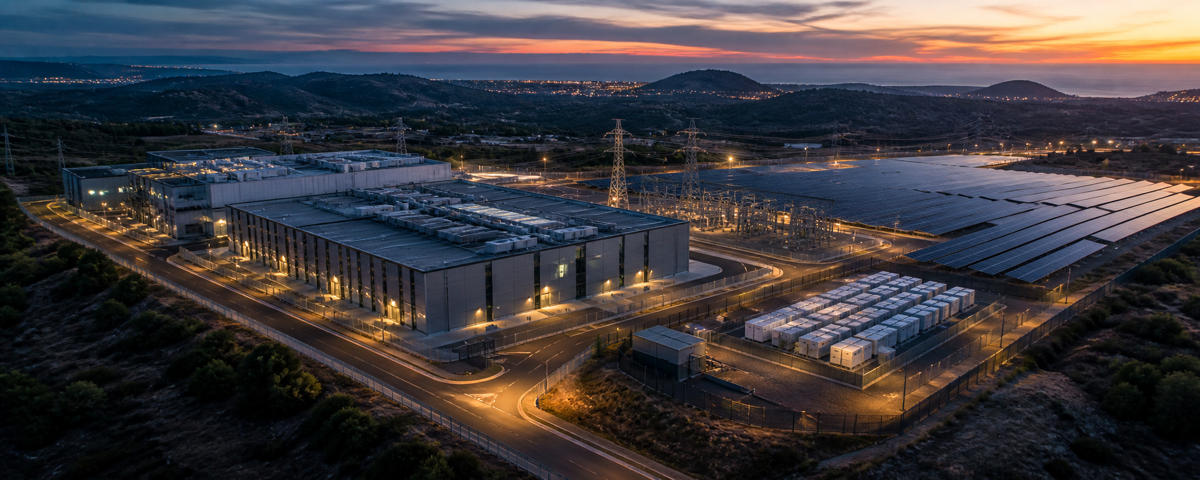
Hourly matching turns renewable procurement into an operational design problem, not an annual certificate exercise.
2. Albania is creating a licensed market for storage, aggregation and active customers
Albania’s new Electricity Sector Law No. 59/2026 entered into force in July and recognizes energy storage and aggregation as licensed activities. It also creates the category of “active clients,” which can generate, consume, store and sell electricity. In parallel, May rules established grid-connection and net-billing procedures for renewable self-producers. The policy shift follows rapid market growth: Albania’s energy regulator recorded 631 MW of cumulative solar capacity at the end of 2025, while non-hydro renewable generation reached 702 GWh in the first half of 2026, up 51% year on year, according to data reported from the national statistics office.
The opportunity is not merely another low-cost module destination. Albania is moving from capacity addition toward market integration, and its constraints are now grid capacity, balancing, flexibility and bankability. That favors modular C&I solar-plus-storage packages, utility-scale designs prepared for later storage addition, and partners that can support connection studies and market participation. Commercial offers should separate hardware supply from revenue assumptions: the legal framework is advancing, but licensing details and route-to-market economics still need project-level diligence.
- Event date: July–27 August 2026
- Publication date: 27 August 2026
- Priority: High
- Confidence: High for regulatory and capacity facts; medium-high for forward commercial interpretation
- Sources: pv magazine market analysis; Albanian Energy Regulatory Authority market page
3. Romania’s 95 MWp solar and 220 MWh storage build shows that grid infrastructure is now part of the product
WALDEVAR has begun construction of two co-located projects at Dobrești in Dolj for SANY Group, combining 95 MWp of PV, 220 MWh of battery storage, a 110/20 kV transformer substation and a 110 kV underground line. The project announcement estimates about 135 GWh of annual PV output. The ceremonial site event occurred on 14 August, while the detailed construction disclosure was published on 25 August; this should therefore be treated as a project-start signal, not a commissioning claim. The battery’s MW rating was not disclosed, so a defensible storage-duration calculation is not possible.
The most useful sales lesson is scope. A credible utility proposal in Romania increasingly needs to connect module supply, BESS integration, medium- and high-voltage equipment, grid studies, civil works and a staged delivery plan. Sellers should approach Romanian EPCs and developers with a responsibility matrix and evidence package before discussing headline price. The absence of a disclosed battery power rating also underlines why MWh alone is not enough for procurement qualification.
- Event date: 14 August 2026; construction disclosure on 25 August 2026
- Publication date: 25 August 2026
- Priority: High
- Confidence: Medium-high; company-supplied project information reported by multiple industry outlets
- Sources: The Diplomat Bucharest; Solar Industry Romania cross-check
4. Baltic hybrid projects show that optimization and market access can be as valuable as the battery
Capalo AI and European Energy have agreed on optimization, route-to-market and trading services for two hybrid solar-plus-storage assets in Lithuania and Latvia. The Lithuanian Anykščiai asset combines 78.5 MW of solar with a 25 MW/65 MWh battery; commissioning and market prequalification for the battery were reported as completed in August. Latvia’s Saldus Hybrid Park is under construction with 46 MW/105 MWh of storage. Together, the announcement covers more than 140 MWp of solar and 71 MW/170 MWh of batteries.
The value signal is operational rather than purely technical. Day-ahead, intraday and balancing-market participation, with coordinated solar and battery dispatch, determines whether a hybrid asset can monetize volatility. Public disclosures have contained different historical battery figures for both projects, so suppliers must confirm the final configuration before quoting. For sales teams, the best opening is a commissioning-ready package: compatible communications, warranty conditions for dispatch-intensive operation, state-of-charge data access and prequalification support.
- Event date: 26 August 2026
- Publication date: 26 August 2026
- Priority: High
- Confidence: High for the announced partnership; medium-high for final asset configuration because earlier disclosures differ
- Sources: Capalo AI announcement; pv magazine configuration cross-check
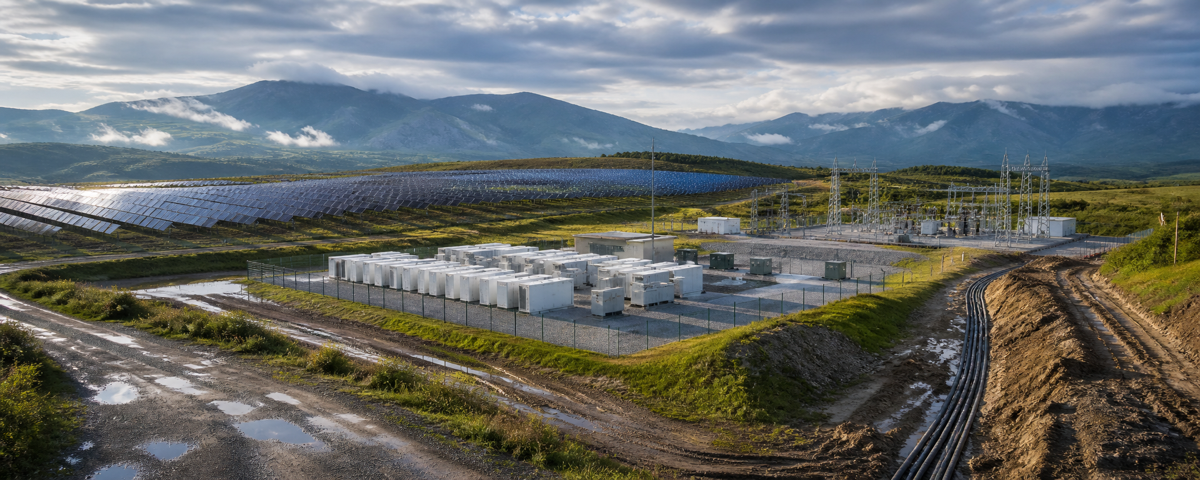
In emerging European markets, the winning scope increasingly includes grid connection, storage controls and market participation.
5. More than 100 MW of modules returning to the channel makes delivery certainty a competitive weapon
Search4Solar announced an agreement to facilitate the redistribution of more than 100 MW of Tier 1 modules across Europe. The platform says it will allocate inventory among EPCs, installers and distributors while coordinating inspection and logistics, rather than placing the entire volume with one buyer. The stock is associated with delayed, redesigned or cancelled projects, illustrating how usable equipment can return to the channel at short notice.
This is both a procurement opportunity and a warning. Buyers may gain access to attractive spot volumes, but large secondary allocations can pressure local pricing and complicate warranty, traceability and project-matching decisions. A distributor should not answer only with a lower number. The stronger counteroffer is a verified bill of materials, serial-number traceability, connector and cable compatibility, production-date disclosure, warranty route, delivery window and local replacement plan. Inventory intelligence is becoming part of the sales function.
- Event date: August 2026
- Publication date: 27 August 2026
- Priority: High
- Confidence: Medium-high; primary company announcement, transaction details not independently disclosed
- Sources: Search4Solar announcement; pv magazine press-release record

Large spot volumes reward buyers who can verify product provenance, warranty routes and delivery fit quickly.
6. Battery deployment can shift more solar beyond sunset, but Europe still trails the global pace
Ember’s 12 August analysis, newly amplified by industry coverage on 27 August, estimates that 459 GWh of battery capacity may be added worldwide in 2026, 50% more than the 307 GWh added in 2025. In theory, that capacity could shift 34% of new daily solar generation into non-sunny hours, compared with 18% for 2025 additions. Solar supplied more than 10% of global electricity in the first half of 2026, but output remained concentrated around midday. The EU added 27 GWh of storage in 2025, theoretically sufficient to shift 16% of new daily solar generation, below the global average.
The 34% figure is a theoretical ceiling, not measured energy delivered after sunset: batteries also provide reserves and other services, may not cycle fully, and are not always paired with solar. The commercial conclusion is still important. Storage capacity alone is not the product; controls, market access, cycling assumptions and warranty economics determine usable value. Bulgaria’s rapid storage build provides a nearby European proof point, while the EU-wide shortfall leaves room for integrators that can present a bankable operating case.
- Event date: 12 August 2026
- Publication date: 27 August 2026 for the latest industry coverage
- Priority: Medium-high
- Confidence: High for published analysis; theoretical scenarios clearly identified
- Sources: Ember research; pv magazine summary
7. European premium-module prices are firmer, while bifacial TOPCon remains more volatile
The latest July-based European marketplace analysis reported average prices of approximately €0.138/Wp for full-black modules, €0.135/Wp for back-contact modules and €0.128/Wp for monofacial TOPCon modules. Bifacial TOPCon had risen from €0.088/Wp in December 2025 to €0.125/Wp in May 2026 before falling to about €0.110/Wp in July. Separately, the fresh 100 MW redistribution signal shows that headline category averages can coexist with aggressive lot-specific offers.
The important conclusion is segmentation, not a universal price direction. Residential aesthetics, high-efficiency back-contact supply, utility-scale bifacial modules and returned project inventory are behaving differently. For 730–750 W and other high-power formats, the commercial case should be quoted as delivered system value: modules per megawatt, transport density, handling limits, tracker compatibility, installation labor and verified local availability. A broad “module price is rising” message is too weak for serious European buyers.
- Event date: July–25 August 2026
- Publication date: 25 August 2026
- Priority: Medium-high
- Confidence: Medium-high; marketplace-derived data reported by industry media
- Sources: PVTIME summary of the PV.index data; Sun.store live marketplace
European sales opportunities
| Target market or account type | Product entry point | Why now | Recommended follow-up |
|---|---|---|---|
| Spanish data-center developers, energy-service companies and PPA originators | High-efficiency PV, modular BESS, EMS interface requirements and auditable delivery schedules | The draft rule links grid access to additional renewable capacity and hourly matching | Build a one-page solution matrix showing solar profile, storage-duration options, metering boundary, EMS responsibilities and documentation deliverables; approach projects above 1 MW before the consultation closes |
| Albanian C&I self-producers, utilities and regional EPCs | C&I solar-plus-storage packages and storage-ready utility designs | Storage, aggregation and active-customer roles now have a legal basis | Qualify local licensing, connection and net-billing partners; offer two scopes, immediate PV plus storage-ready controls and a complete hybrid system |
| Romanian developers and EPCs with secured land or grid rights | Utility-scale modules, BESS integration, MV/HV coordination and staged logistics | Dobrești confirms active construction demand and the importance of grid infrastructure | Request a grid-and-scope qualification call before quoting; map responsibilities for substation, line, SCADA, commissioning and warranty handover |
| Lithuanian and Latvian hybrid-asset owners and optimizers | Dispatch-compatible batteries, controls, telemetry and performance documentation | New projects are entering market prequalification and trading | Lead with communications architecture, cycle assumptions, availability guarantees and data access rather than container capacity alone |
| European distributors and EPCs facing spot inventory | Verified high-power and mainstream module lots with fast regional delivery | More than 100 MW of returned inventory can move across borders quickly | Issue a weekly availability sheet that includes production date, serial traceability, connector type, warranty route, Incoterm and firm delivery window |
Product positioning for Solligent: use “documented delivery certainty” as the commercial spine. For module offers, combine wattage and efficiency with pallet configuration, transport density, connector detail, warranty route and European delivery window. For storage offers, add operating use case, power-to-energy ratio, communications scope and warranty cycling assumptions.
Risks and warnings
- Policy risk: Spain’s requirements are a draft under consultation, not final law. Do not present 80% hourly matching as an enacted obligation until the final decree is published.
- Price risk: Returned project inventory may create aggressive spot offers that do not represent repeatable replacement cost. Quote validity and allocation windows should be explicit.
- Competition risk: Platforms that combine cross-border inventory visibility with inspection and logistics can compress distributor response times and margins.
- Configuration risk: Public MWh figures without MW ratings do not establish duration. Historic disclosures for Baltic projects also show why final technical schedules must be confirmed before procurement.
- Grid risk: Albania and Romania offer growth, but connection capacity, balancing access and high-voltage scope can determine project bankability more than module price.
- Supply-chain risk: Large modules and returned inventory need tighter checks on packaging, handling, connector compatibility, storage history and warranty ownership.
- Sentiment risk: No verified crisis-level negative public signal was found in the measured sources reviewed for this report.
Brand and competitor dynamics
| Classification | Public signal | Commercial meaning |
|---|---|---|
| lead | Search4Solar is facilitating redistribution of more than 100 MW of modules | European buyers will expect faster stock visibility, documentation and cross-border logistics |
| lead | WALDEVAR and SANY disclosed a 95 MWp PV and 220 MWh storage construction scope in Romania | Romanian utility procurement is active, but grid and BESS integration are already embedded in the competitive scope |
| lead | Capalo AI and European Energy are commercializing two Baltic hybrid assets through coordinated trading | Software compatibility, prequalification and route-to-market capability are becoming purchase criteria |
| question | Spain’s draft leaves practical questions around hourly evidence, storage treatment and adaptation for projects already in development | Sales proposals should make assumptions explicit and avoid claiming regulatory certainty |
| crisis | None verified in the measured open-web sources reviewed | No immediate escalation required |
| bug | None verified | No product defect signal attributable to a named supplier was included |
| praise | None independently material enough to include | No action required |
| spam | Search and social-index noise was excluded during deduplication | No action required |
No new, independently verifiable, sales-actionable third-party public mention of Solligent was identified in this reporting window. Similar names and first-party pages were excluded from the brand-mention count.
Seven-day trend
| Signal | Current observation | Comparison with reports dated 21, 24 and 26 August | Flag |
|---|---|---|---|
| Solar plus storage as one commercial scope | Five of today’s seven priority items involve storage, dispatch or hourly matching | Storage appeared repeatedly in the prior three reports, but today it is tied more directly to procurement and grid access | Elevated, directional |
| Southeast European opportunity density | Albania, Romania and the Baltic states account for three priority items | Romania and broader European flexibility were already present, but the geographic concentration is stronger today | Elevated, directional |
| Module-market segmentation | Premium categories are firmer while bifacial TOPCon and returned inventory remain more volatile | Previous reports focused on TOPCon cell and module price movement; today’s shift is toward lot quality, availability and provenance | Changed sales emphasis |
| Pure technology launches | No new BC, HJT or 730–750 W launch was strong enough to outrank the market signals above | Technology news was more prominent earlier in the week | Muted |
The rolling baseline is still being built. These flags compare four report dates and should be read as directional, not as statistically validated social-volume anomalies.
Coverage disclosure
- Measured: Public pages from government bodies, regulators, company announcements, energy research organizations and established industry media. Dates, project capacities and policy wording were checked against the linked sources. Duplicate coverage was consolidated.
- Proxy: Search-indexed public references from X, Instagram, TikTok, LinkedIn, Xiaohongshu, WeChat, WeChat Channels and Douyin may help discover topics, but no closed-platform export or account-level analytics was provided. Therefore no post volume, engagement, sentiment share or trend figure from those platforms is presented as measured.
- User-provided: Reporting priorities, language and brand rules, publishing requirements and prior local reports. No user-provided market statistic was treated as external evidence.
Three immediate sales actions
- Create a Spanish data-center solution sheet today. Show two or three hourly-matching architectures with PV, two-hour and four-hour storage options, EMS responsibility, metering points and a list of assumptions that depend on the final decree.
- Launch a Southeast Europe account sprint. Build a short list of Albanian C&I integrators, Romanian EPCs and Baltic hybrid developers; ask first about grid rights, project stage, battery MW/MWh, market-access partner and delivery window.
- Publish a verified European availability format. For every module lot, include wattage range, technology, production date, serial traceability, connector, pallet count, warehouse, Incoterm, warranty route and firm validity period; use the same discipline for 730–750 W offers.