





Bankable Solar Is Winning as Prices, Pipelines and Grid Value Diverge
Bankable Solar Is Winning as Prices, Pipelines and Grid Value Diverge
Solar Hot Topics Report | 31 August 2026 | Beijing Time
One-line takeaway
European solar demand is rewarding projects that can convert capital and grid access into delivery, while TOPCon offer inflation, excess global capacity and weather variability make bankability and system design more decisive than headline module price.
Priority hot topics ranked by sales value
1. Cube Green Energy turns EUR 150 million of financing into a near-term procurement pipeline
Cube Green Energy disclosed approximately EUR 150 million of recent debt transactions spanning asset, corporate and portfolio financing. The developer also reported more than 250 MW of projects with secured tariffs following Germany's July EEG auction and more than 150 MW at financial close. This is a strong conversion signal: projects are moving from award and development into bankable execution, where module, inverter, storage, grid-integration and documentation packages can be evaluated against construction schedules rather than speculative pipelines.
The commercial opening is not simply to quote equipment. Suppliers should map which projects have reached financial close, identify EPC and owner-engineer decision makers, and package technical files, delivery slots, warranty structure and replacement-stock commitments in a lender-ready format.
- Event date: Recent weeks, disclosed 27 August 2026
- Publication date: 27 August 2026
- Source: Cube Green Energy
- Priority: Very high | Confidence: High; primary company disclosure
2. Dublin Airport's solar-plus-storage procurement sets a template for resilience-led C&I demand
Dublin Airport Authority is closing a procurement process on 31 August for a large-scale PV installation integrated with battery storage under a single-supplier works agreement. The 24-month framework is explicitly tied to decarbonisation, energy resilience and a more self-sufficient power supply. Even for suppliers outside the current bid, the specification is valuable market intelligence: large energy users are buying a coordinated operating outcome, not separate boxes.
For future airport, logistics, data-centre and industrial opportunities, proposals should quantify critical-load coverage, dispatch strategy, grid constraints, commissioning responsibility, cybersecurity interfaces, spares and service response. A module-only offer is structurally weaker unless it is embedded in an accountable system-delivery package.
- Event date: Bid deadline 31 August 2026, 15:00 Ireland time
- Publication date: 23 July 2026
- Source: Ireland's official eTenders portal
- Priority: Very high and time-sensitive | Confidence: High; official procurement notice

Capital is moving toward integrated assets with visible grid and delivery pathways.
3. Ireland passes 3 GW of solar, making flexibility the next addressable market
Solar Ireland confirmed that installed PV capacity has passed 3 GW, covering utility-scale plants and more than 200,000 solar homes. Utility-scale output also reached a 1.3 GW peak and supplied more than one-third of national electricity demand at that moment. The association is now calling for Budget 2027 measures supporting rooftop PV, batteries and grid investment.
The milestone changes the sales conversation. Ireland still needs modules, but incremental value is shifting toward self-consumption, export management, storage attachment, controls and after-sales support. Distributors and installers should segment the opportunity by household retrofit, farm and SME resilience, and grid-scale flexibility instead of treating the country as one undifferentiated module market.
- Event date: Record output on 24 August; 3 GW milestone confirmed 27 August 2026
- Publication date: 27 August 2026
- Source: Solar Ireland
- Priority: High | Confidence: High; national industry association with government and grid-operator statements
4. SECI opens a 100 MWh short-duration storage tender as hybrid procurement broadens
Solar Energy Corporation of India published a request for selection covering 100 MWh of standalone storage configured as 50 MW for two hours, with bids due 30 September. On the same day, SECI also posted a 100 kW rooftop PV project at the National Institute of Wind Energy and an auditor-empanelment request for the renewable-energy sector.
The combined signal matters beyond India: storage capacity, distributed PV and compliance capability are being procured in parallel. Vendors should prepare modular qualification packs covering cycle assumptions, degradation, usable capacity, warranty throughput, fire-safety design, controls, cybersecurity and independent audit readiness. Price per kilowatt-hour alone will not resolve lifecycle risk.
- Event date: 28 August 2026
- Publication date: 28 August 2026
- Source: Solar Energy Corporation of India tender register
- Priority: High | Confidence: High; government enterprise tender register
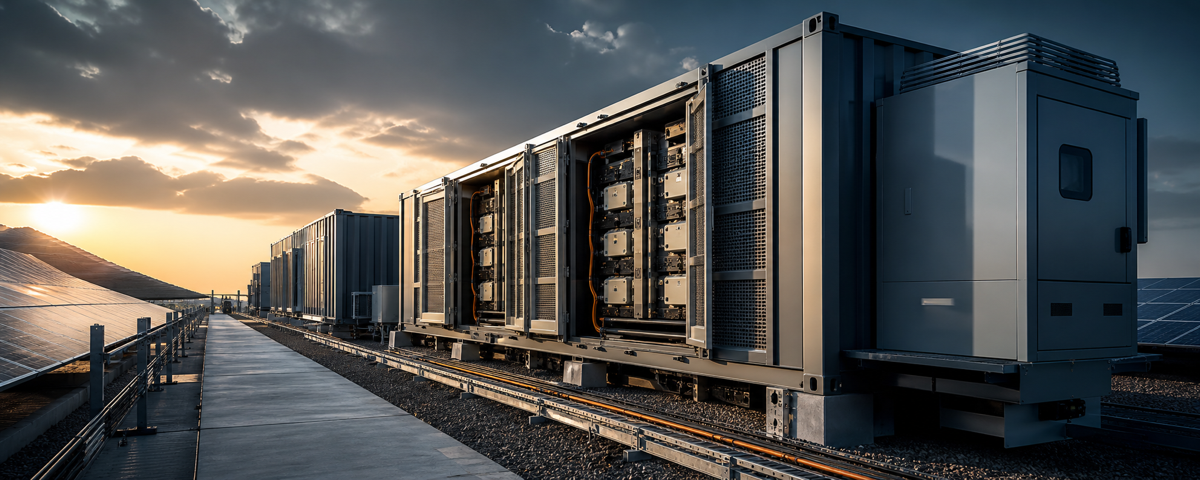
Storage value depends on controls, safety, usable energy and accountable lifecycle support.
5. TOPCon offers rise faster than completed deals, creating a two-speed module market
OPIS assessed FOB China TOPCon modules below 645 W at USD 0.108/W for the week of 25 August, up 2.86% week on week. Forward indications for the first three quarters of 2027 were USD 0.107/W, USD 0.106/W and USD 0.105/W. TOPCon M10 and 210R cell prices rose by roughly 16% and 17% in one week, yet overseas utility-scale transaction levels remained broadly flat as higher offers met buyer resistance.
This is a replacement-cost warning, not proof of a uniform European price increase. Distributors should separate prompt European inventory from forward factory supply, shorten validity where upstream inputs are exposed, and document lot age, warranty path and freight assumptions. For 730–750 W modules, the premium must still be earned through layout density, racking, cabling and installation savings.
- Event date: OPIS assessment dated 25 August 2026
- Publication date: 28 August 2026
- Source: pv magazine summary of OPIS Solar Weekly
- Priority: High | Confidence: High; established price-reporting methodology reported by specialist media
6. A 638 GW installation forecast still sits beneath more than 1.2 TW of excess module capacity
Intertek CEA forecasts 638 GW of global PV additions in 2026 while estimating about 1,908 GW of module manufacturing capacity, leaving more than 1.2 TW above projected installations. Polysilicon capacity was estimated at roughly 2,034 GW equivalent. CEA expects Chinese module pricing to firm into 2027 as suppliers seek cost pass-through and better margins, even though structural oversupply remains severe.
The apparent contradiction is commercially important. Excess nameplate capacity can coexist with rising replacement costs, manufacturer losses, selective production discipline and technology-specific shortages. Buyers should avoid speculative inventory bets based on a single macro headline and instead qualify suppliers by financial resilience, production continuity, traceability and local warranty execution.
- Event date: Q2 2026 market analysis
- Publication date: 28 August 2026
- Source: pv magazine summary of Intertek CEA analysis
- Priority: Medium-high | Confidence: High; specialist advisory analysis reported by industry media
7. Europe's August irradiance surplus highlights both upside and operational exposure
Solcast analysis reported average European global horizontal irradiance 5% above the 2007–2025 norm in August, with nearly three-quarters of the continent above average. Southern England recorded anomalies above 20% before cooler and cloudier weather reduced late-month gains in parts of western Europe. Persistent dry conditions also increased modeled soiling losses before rainfall returned.
For asset owners, this is a reminder that headline resource gains do not automatically become revenue. Forecast accuracy, cleaning strategy, curtailment exposure, battery dispatch and regional weather divergence all affect realized value. O&M and monitoring propositions should quantify avoided loss and response time rather than rely on generic performance claims.
- Event date: August 2026, with a late-month weather shift
- Publication date: 28 August 2026
- Source: pv magazine report based on Solcast data
- Priority: Medium | Confidence: High; modeled satellite data with methodology disclosed

Resource upside becomes bankable only when forecasting, cleaning and flexibility are managed.
European sales opportunities
| Target account or market | Commercial signal | Product entry point | Recommended follow-up |
|---|---|---|---|
| German developers with secured EEG tariffs and financial close | More than 250 MW with tariffs and over 150 MW at financial close | Bankable modules, inverters, storage, grid equipment and delivery assurance | Map project stage, EPC status, procurement calendar and lender requirements |
| Irish airports, logistics hubs and energy-intensive C&I sites | Integrated PV and BESS is being procured for resilience | EMS, backup design, commissioning and service | Build a reusable resilience proposal with dispatch and response assumptions |
| Irish residential, farm and SME channels | Installed PV exceeds 3 GW and policy focus is shifting to storage | Retrofit batteries, hybrid inverters, export control and support | Offer attachment-rate campaigns with compatibility checks |
| European module distributors and utility EPCs | Upstream TOPCon prices firm while transactions lag | Prompt stock, forward supply and 730–750 W project modules | Separate lots and show delivered cost, provenance and BOS impact |
| European asset owners and O&M providers | Resource, cloud and soiling effects diverged by region | Monitoring, forecasting, cleaning and battery dispatch | Offer a site-level loss review tied to measurable indicators |
Risks and warnings
- Pricing: Cell and module offers are rising faster than completed deals; do not treat offer inflation as a uniform European benchmark.
- Inventory: More than 1.2 TW of modeled excess module capacity raises distress-sale, warranty-continuity and obsolescence risk.
- Project execution: Confirm financial close, notice to proceed, EPC appointment, grid milestones and delivery windows before allocating stock.
- Grid and revenue: Output timing and controllability are becoming as important as annual yield.
- Operations: Strong irradiance can conceal soiling, heat, curtailment and forecast error.
- Tender discipline: Do not bypass eligibility, safety or procurement rules to chase late opportunities.
Brand and competitor dynamics
| Class | Observed signal | Commercial interpretation | Routing |
|---|---|---|---|
| lead | Cube Green Energy financing and tariff-secured pipeline | Bankable projects may enter equipment procurement | Key accounts / within 1 business day |
| lead | Dublin Airport integrated PV-and-BESS procurement | Repeatable C&I resilience specification | Solutions engineering / same day |
| lead | Ireland's 3 GW milestone and storage-support call | Retrofit flexibility demand is becoming addressable | Channel sales / within 1 business day |
| lead | SECI 100 MWh tender | Qualification opportunity and two-hour BESS benchmark | Tender desk / same day |
| crisis / bug / praise / question | None verified in measured open-web sources | No escalation | Continue monitoring |
| spam | Duplicated mirrors and search noise excluded | No action | Suppress and deduplicate |
No fresh third-party brand signal with clear sales or reputational value was verified for Solligent in this reporting window, so no brand claim is included.
Seven-day trend
Baseline building. Four reports, including this edition, are available inside the seven-day comparison window. This supports directional comparison but not a statistically reliable mention-volume or sentiment baseline.
| Signal | Previous pattern | Current change | Assessment |
|---|---|---|---|
| Solar-plus-storage | Repeated in policy, project and market-design stories | Live airport procurement, government tender and national flexibility debate | Persistent high-value theme |
| Project bankability | Grid access and regulation dominated | Financing and financial close move signals closer to procurement | Positive execution shift |
| Module pricing | Premium categories firmed while bifacial TOPCon stayed volatile | Cell increases reach offers, but transactions resist full pass-through | Divergence widening |
| Market balance | Returned inventory indicated channel pressure | More than 1.2 TW of excess module capacity is quantified | Structural risk confirmed |
| System value | PPAs, curtailment and flexibility | Generation peaks and resilience briefs become buying criteria | Sales message strengthening |
No measured crisis spike is present. The notable anomaly is the coexistence of stronger upstream pricing signals with severe structural oversupply and flat completed overseas deals.
Coverage disclosure
- Measured: Public pages from an official procurement portal, a government enterprise tender register, company disclosures, a national industry association and specialist industry media.
- Proxy: Search indexing and public mirrors were used only for discovery and cross-checking. X, Instagram, TikTok, LinkedIn, Xiaohongshu, WeChat Official Accounts, WeChat Channels and Douyin were not measured; no closed-platform volumes or sentiment scores are claimed.
- User-provided: Reporting cadence, language, scope, brand rules and publishing workflow. These instructions were not treated as market evidence.
Three immediate sales actions
- Build a bankable-project call list: identify developers with secured tariffs, financial close or live resilience procurement, then ask for EPC status, lender requirements, delivery quarter and grid milestones.
- Split module offers by commercial reality: separate prompt European stock from forward factory supply and attach provenance, warranty and replacement-stock terms to every TOPCon and 730–750 W offer.
- Turn storage into an outcome package: prepare one template covering usable energy, degradation, dispatch, fire safety, controls, cybersecurity, commissioning and service response.
Editorial cutoff: 31 August 2026, 09:30 Beijing Time. This report is for market-intelligence purposes and does not constitute legal, investment or procurement advice.