





Deye Hybrid Inverters and LFP Batteries: A Practical Guide for European Projects
Deye Hybrid Inverters and LFP Batteries: A Practical Guide for European Projects
Published: 17 September 2026
A practical guide to matching Deye single-phase and three-phase hybrid inverters with low-voltage and high-voltage LFP batteries. Selected configurations are available from Solligent's European stock for distributors, installers, EPCs and project buyers.
The important decision is the system architecture, not the largest model number
Deye's portfolio is broad enough to cover a small single-phase home, a three-phase house with a heat pump, and a small commercial site. That breadth is useful, but it also makes model selection easy to oversimplify. A sound quotation should begin with the grid connection, protected loads, required backup power, daily energy demand, PV array size and local grid-code requirements. Inverter power and battery capacity come after those questions.
For European buyers, the most practical split is between 48 V low-voltage systems and high-voltage battery systems. Low-voltage architecture is flexible and service-friendly for residential installations, while high-voltage architecture becomes more attractive as inverter power, battery capacity and cable length increase.
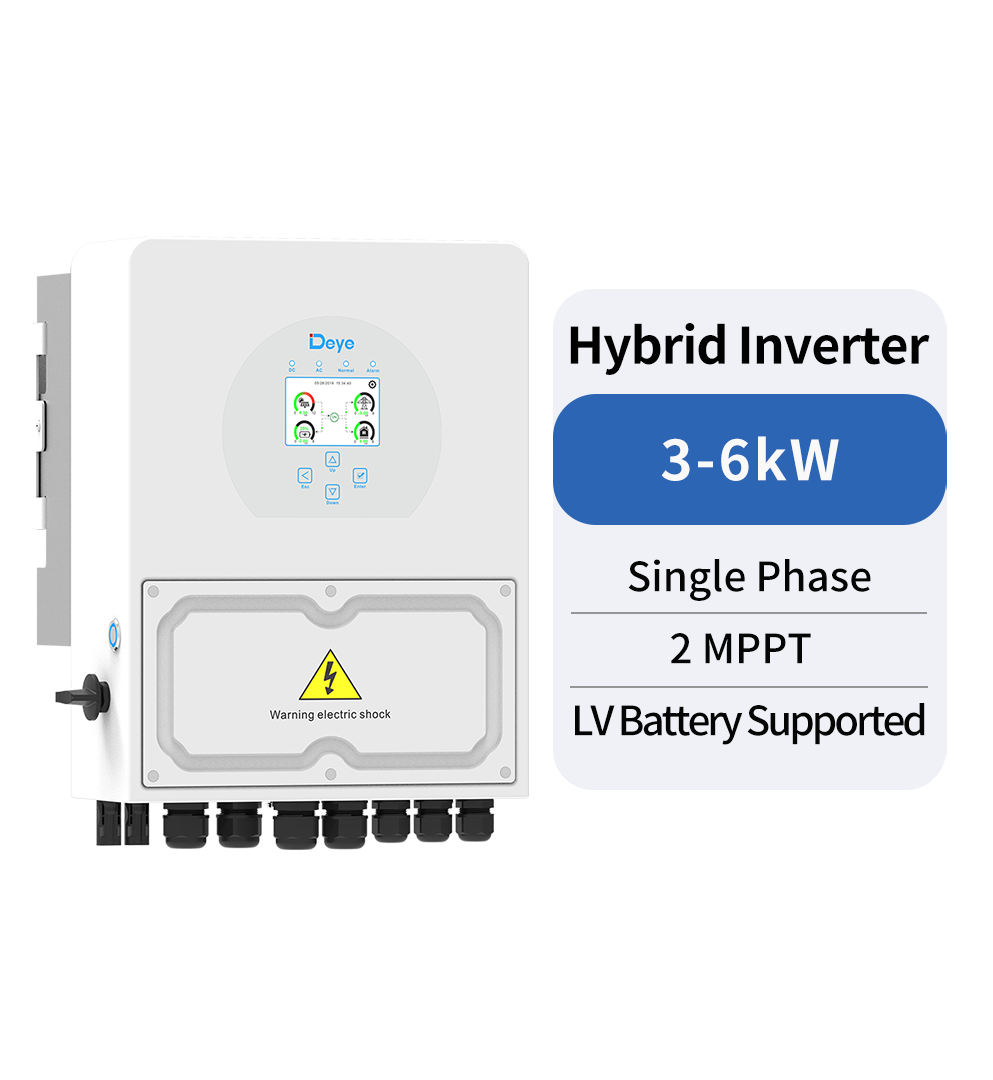
Official Deye product image: SUN-3/3.6/5/6K-SG04LP1-EU single-phase low-voltage hybrid inverter.
Two inverter families that cover most residential requests
SUN-3/3.6/5/6K-SG04LP1-EU: single-phase, low-voltage and retrofit-friendly
This 3-6 kW platform supports a 40-60 V battery system on the 48 V variants and uses two MPPTs. It is especially relevant for apartments, small homes and retrofit projects where a single-phase grid connection and modest backup loads are the design starting point.
Its commercial advantage is flexibility: AC coupling can bring an existing PV installation into a storage project, six programmable charge/discharge periods support time-of-use operation, and generator integration can be valuable in weak-grid or backup-focused markets. The 48 V variants provide model-dependent charging and discharging current up to 135 A, so cable sizing, protection and battery current limits must be checked rather than assumed.
SUN-3/4/5/6/8/10/12K-SG05LP3-EU-SM2: three-phase power without leaving the 48 V ecosystem
The SG05LP3 range covers 3-12 kW, uses two MPPTs and supports 40-60 V batteries. The 12 kW model reaches up to 240 A charge/discharge current, while the PV side supports up to 800 V maximum input voltage. This makes the range useful for three-phase homes, larger villas, workshops and small businesses that want to retain the sourcing flexibility of a low-voltage battery architecture.
The engineering trade-off is current. At higher power, a 48 V system requires substantial DC current, heavier conductors and disciplined protection design. For compact residential systems this can be entirely reasonable; for longer cable runs or larger commercial capacities, a high-voltage platform may be the cleaner solution.
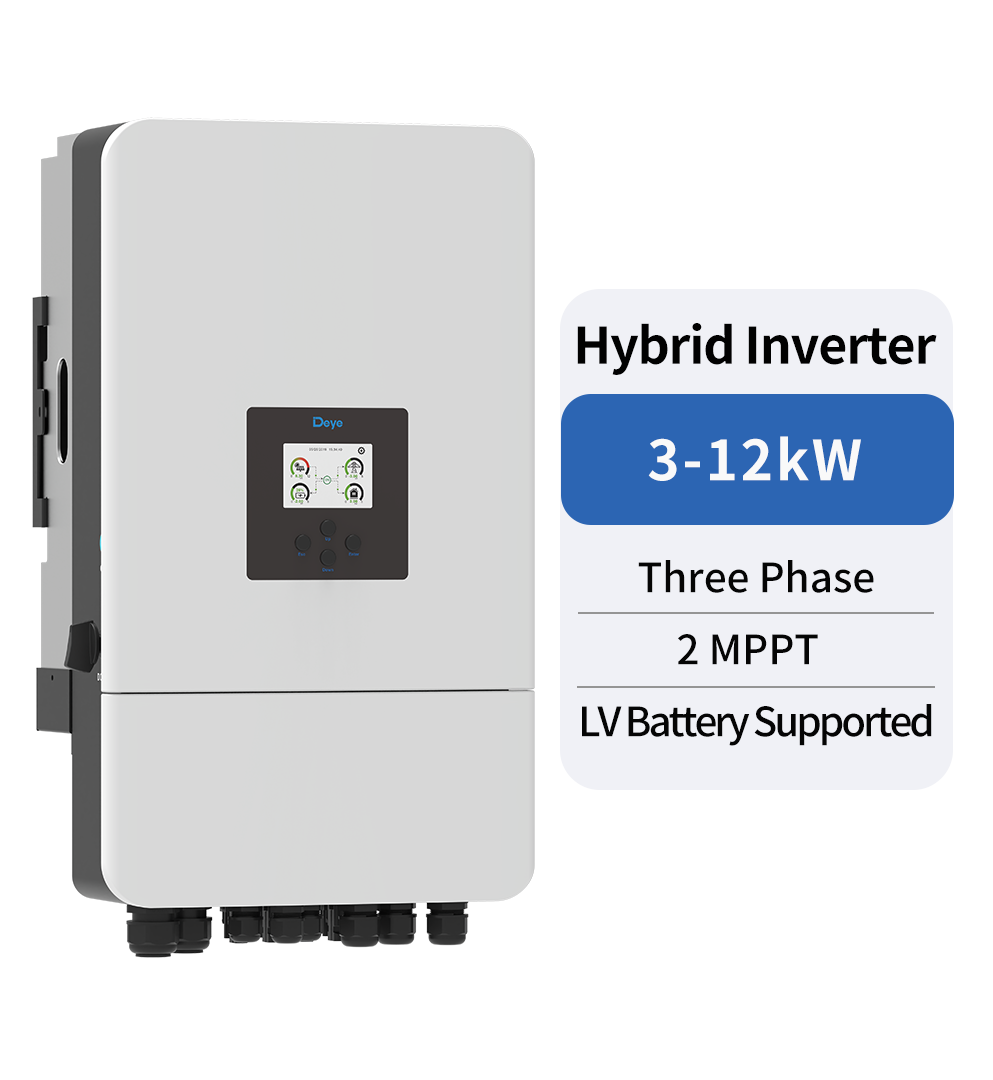
Official Deye product image: SUN-3/4/5/6/8/10/12K-SG05LP3-EU-SM2 three-phase low-voltage hybrid inverter.
Battery choices: four products, four different jobs
| Battery | Architecture | Nominal energy | Best fit | Practical buying note |
|---|---|---|---|---|
| SE-G5.1 Pro-B | 51.2 V rack/wall/floor module | 5.12 kWh per module | Flexible residential and light-commercial LV systems | Modular expansion and familiar 48 V service practices; verify total current and parallel configuration. |
| AI-W5.1-B | 51.2 V floor-stacked module | 5.12 kWh per module; 5.12-30.72 kWh nominal systems | Design-led residential storage with quick stacking | IP65 and cable-free stacking simplify the installation concept; size usable energy and discharge power separately. |
| GB-L Pro | High-voltage floor stack | 8-24 kWh nominal; 7.2-21.6 kWh usable | Premium homes and three-phase HV residential systems | Lower DC current and an integrated stack format suit cleaner high-voltage installations. |
| BOS-G Pro | High-voltage rack system | 25.6-81.92 kWh nominal; 23.04-73.72 kWh usable | Small commercial and industrial projects | Rack architecture scales methodically, but inverter voltage window and module count must be matched before ordering. |
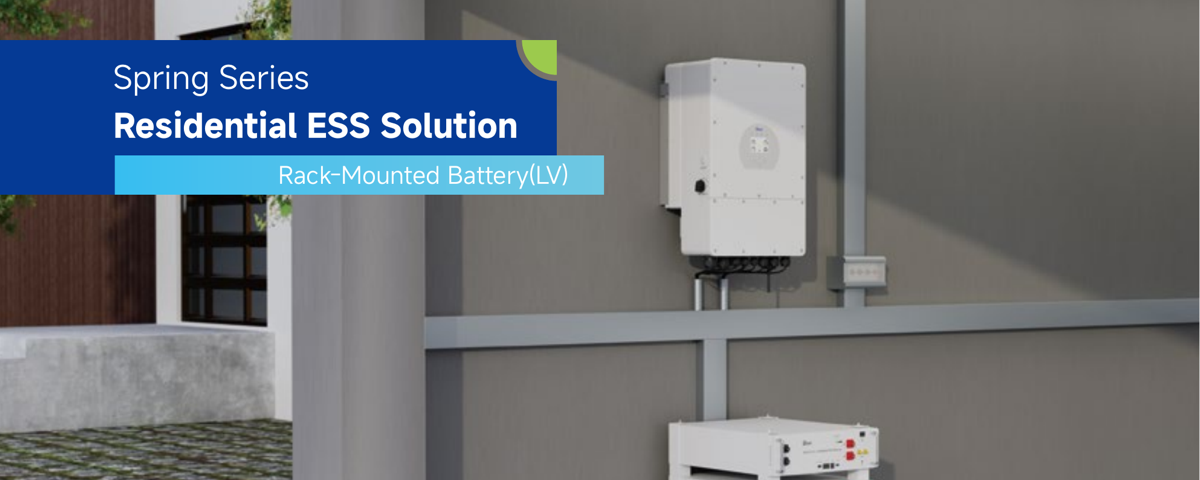
Official Deye product scene: SE-G5.1 Pro-B low-voltage rack-mounted battery modules with a Deye hybrid inverter.
SE-G5.1 Pro-B: the flexible 5.12 kWh building block
SE-G5.1 Pro-B is the practical choice when installers want a conventional 51.2 V LFP module that can be wall-mounted, floor-mounted or rack-mounted. Its strength is not visual integration; it is configurability. That makes it a good fit for installers who already have clear standards for DC protection, communications and rack layout.
The key quotation question is not only how many modules are required. Buyers should confirm maximum continuous battery current, the permitted number of parallel units, the external setup required for larger banks, and the exact inverter/battery firmware combination.
AI-W5.1-B: a cleaner residential stack
AI-W5.1-B uses 5.12 kWh modules in a floor-stacked format and scales from one to six battery modules. It suits projects where appearance, quick mechanical assembly and IP65 protection matter. The nominal system range reaches 30.72 kWh, but the correct design should be based on usable energy, discharge power and the protected-load profile rather than the headline capacity alone.
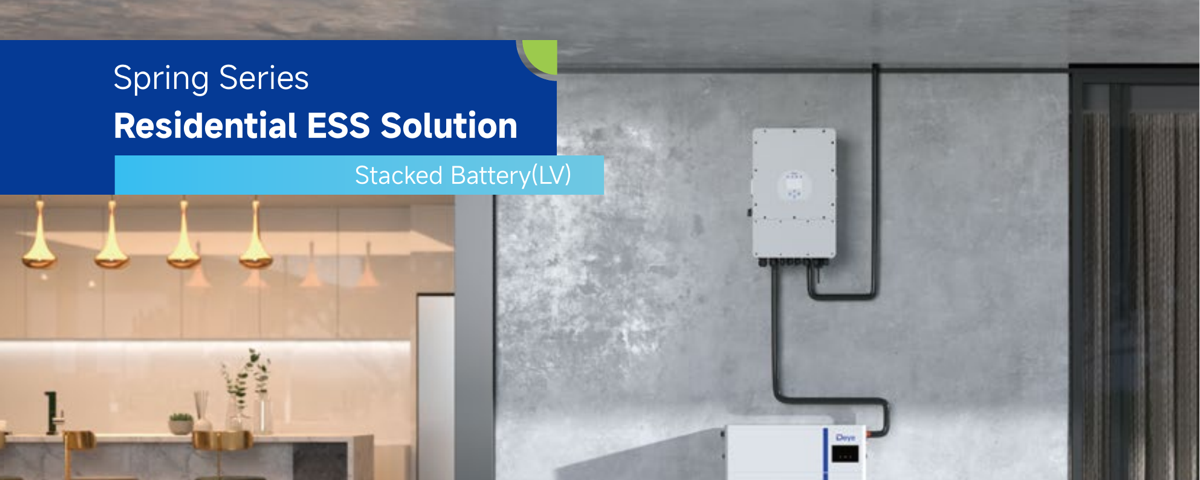
Official Deye product scene: AI-W5.1-B stacked low-voltage battery with a Deye hybrid inverter.
GB-L Pro: high-voltage storage for premium residential systems
GB-L Pro uses 4 kWh high-voltage modules and is offered in 8, 12, 16, 20 and 24 kWh nominal configurations. The corresponding usable-energy range is 7.2-21.6 kWh. Its cable-free stack format and IP65 enclosure make it attractive where installers want a compact, integrated residential solution and where higher DC voltage is preferable to very high battery current.
BOS-G Pro: a rack system for small C&I applications
BOS-G Pro uses 5.12 kWh rack modules to form 25.6-81.92 kWh nominal systems. The 2026 product range covers 256-819.2 V nominal system voltage, depending on module count, and is designed for Deye high-voltage hybrid inverters used in small commercial projects.
The commercial insight is simple: a BOS-G quotation should be treated as a system configuration, not as a loose battery-module price. Module count, rack, PDU, inverter voltage range, usable energy, current, communications and project runtime target must be aligned in one bill of materials.
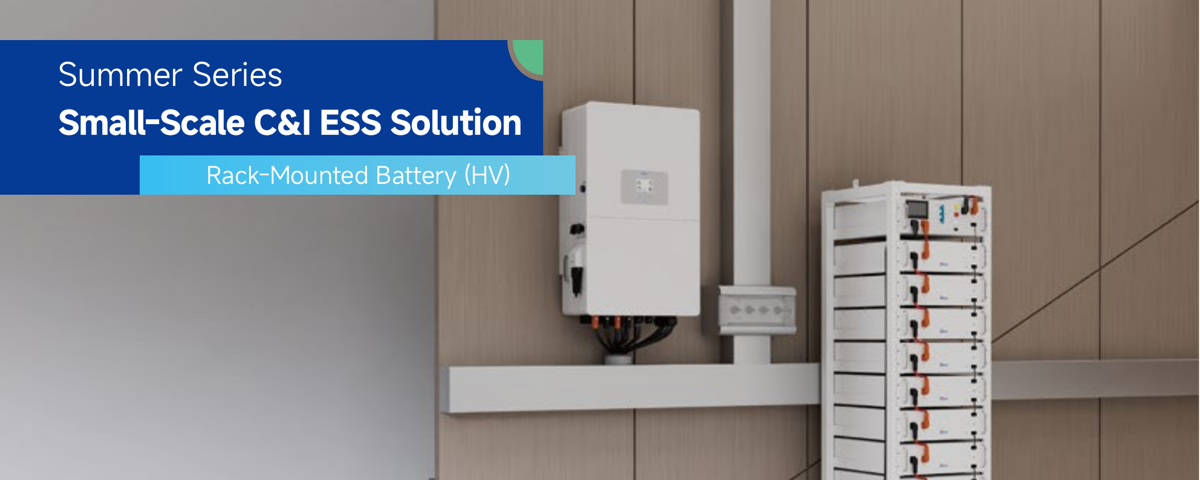
Official Deye product scene: BOS-G Pro high-voltage rack battery system for small commercial and industrial applications.
Recommended starting configurations
| Project profile | Inverter starting point | Battery starting point | Why this combination works |
|---|---|---|---|
| Small single-phase home | 3.6-6 kW SG04LP1 | 5.12-10.24 kWh SE-G5.1 Pro-B or AI-W5.1-B | Balanced entry cost, straightforward retrofit potential and enough storage for essential evening loads. |
| Three-phase home with heat pump | 8-12 kW SG05LP3 | 15.36-30.72 kWh AI-W5.1-B or a correctly sized LV bank | More inverter power and energy for higher household demand; verify peak current and backup-load separation. |
| Premium residential HV system | Deye three-phase HV hybrid platform | 12-24 kWh GB-L Pro | Lower battery-side current and a compact integrated stack are well suited to larger residential projects. |
| Retail, farm or small workshop | 30-80 kW Deye HV hybrid platform | 25.6-81.92 kWh BOS-G Pro | Rack-based expansion and a high-voltage DC bus align better with small C&I power levels. |
These are starting points, not final designs. Heat pumps, EV chargers, motors and compressors can create peaks that are not visible in daily kWh consumption. Backup power should therefore be checked in kW and current, not only in hours of autonomy.
Seven questions to answer before requesting a quotation
- Which country and grid code will apply at the final installation address?
- Is the connection single-phase, three-phase 400 V, or a local 3 x 230 V configuration?
- Which loads must remain on during an outage, and what is their simultaneous peak power?
- How much usable battery energy is required after depth-of-discharge and reserve settings?
- Is the project a new PV installation, an AC-coupled retrofit, or a generator-assisted system?
- What are the cable lengths, installation environment, IP requirements and temperature range?
- Who will provide commissioning, firmware alignment and warranty support in the destination market?
European stock and procurement support from Solligent
Selected Deye inverter and battery configurations are available from Solligent's European stock. Availability, allocation, lead time, warranty routing and commercial terms are confirmed for each RFQ.
Distributors, installers, EPCs and project buyers are welcome to purchase. For a precise offer, send Solligent the destination country and postcode, grid phase, target inverter power, preferred battery capacity, protected-load list and required delivery date. This information lets the sales team confirm a compatible configuration instead of quoting disconnected components.
Product references
- Deye SUN-3/3.6/5/6K-SG04LP1-EU product page
- Deye SUN-3/4/5/6/8/10/12K-SG05LP3-EU-SM2 datasheet
- Deye 2026 global energy-storage brochure
Product availability, compatibility and warranty terms vary by country and project. Final system design and grid compliance must be confirmed by a qualified installer.